
How Much Does Commercial Snow Removal Cost in Toronto? 2026-27 Pricing Guide
Commercial property owners in Toronto rarely get much warning before winter hits. One storm rolls through overnight, and by morning a parking lot that was clear the day before needs plows, salt, and a crew that actually shows up before the first person walks in. Budgeting for that reality starts with a straightforward question: what does commercial snow removal actually cost across GTA, and why do two nearly identical properties sometimes end up with very different invoices from one winter to the next? This guide breaks down current pricing models, the factors that push a quote higher or lower, and what a typical contract should actually cover.
Commercial Snow Removal Costs in Toronto & GTA
Pricing for commercial properties in Toronto and the wider GTA typically falls into a few recognizable models, and the best fit depends on the size and layout of the property, how much needs to be cleared, how quickly service is required, and whether the business wants predictable winter costs. Snow removal cost figures for Toronto vary widely between quotes this season. Surface area is only part of it – a property's price also depends on how many separate elements need attention during the same storm window, from loading docks and multiple driveways to pedestrian walkways, and a small strip-mall property simply has far fewer of them than a multi-acre distribution centre.
Average Snow Removal Rates by Pricing Model
Pricing Model | Typical Cost Range | Best Suited For |
Per-Visit / Per-Push | Roughly $150 – $1,000+ per visit, depending on property size and scope | Properties comfortable with weather-related cost variability |
Hourly Rate | Approx. $125 – $400 per hour | Larger lots needing variable equipment time |
Per Square Foot | Approx. $0.03 – $0.06 per sq ft per visit | Large parking lots and paved commercial areas |
Seasonal Contract | Approx. $2,000 – $10,000+ per winter | Businesses that want predictable seasonal costs |
Per-Visit and Per-Event Pricing
Per-visit pricing charges a set fee every time a crew clears a property, which suits businesses that prefer to pay for each qualifying service visit rather than commit to a seasonal rate. In GTA, a single commercial visit can range from about $150 for a small property to $1,000 or more for a larger site, depending on the size of the area, site layout, and the amount of work required. For a large lot, commercial snow removal rates per square foot can reflect the actual cleared area more closely than a flat per-visit fee, although larger commercial properties may also be quoted on a seasonal or site-specific basis.
Seasonal Snow Removal Contract Costs
Seasonal contracts are usually priced based on the property and service scope, including lot size, salting frequency, response-time requirements, and the amount of winter service expected. Seasonal commercial contracts across GTA can range from about $2,000 for smaller properties to $10,000 or more for larger commercial and industrial sites, depending on the size of the property and the level of service required. Businesses often choose this option because they'd rather pay one steady amount than get a surprise bill after every storm – even if that steady amount ends up a bit higher in a mild winter. In a heavy winter, an unlimited fixed-price seasonal contract can work in the business’s favour: additional qualifying storms do not generate separate per-event charges, so the fixed seasonal price can end up saving money.
What Affects Commercial Snow Removal Prices?
Several variables shape a final quote, and most providers weigh them differently depending on the property type and location within GTA.
- Property size and the total paved surface requiring clearing
- Number of entrances, loading docks, and pedestrian walkways
- Average snowfall and storm frequency for the season
- Required response time, with tighter service windows generally costing more
- Salting and de-icing frequency
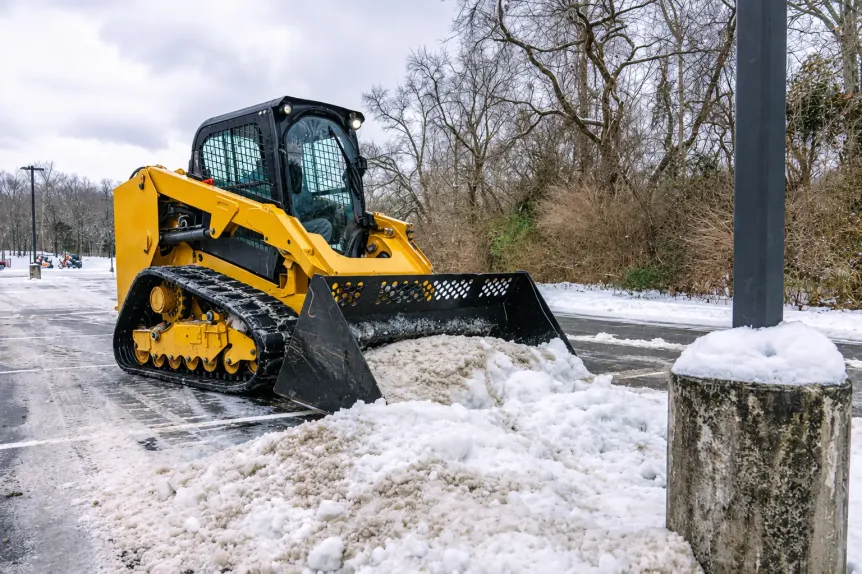
- Equipment needs, such as loaders for larger lots or hand crews for tight walkways
- Contract length and whether service is seasonal or per-event
What Is Included in a Commercial Snow Removal Contract?
A typical commercial contract covers several distinct pieces of work, not just plowing. Here's what each one usually involves.
Plowing of Parking Lots, Drive Lanes and Loading Areas
This is the core of most contracts: clearing the largest paved surfaces so vehicles and staff can move freely once a storm passes. Crews typically follow a site-specific pattern that prioritizes the drive lanes, loading areas, entrances, and other access points most important to the property's operations. Larger lots often need multiple passes during a single storm rather than one pass after it ends, since heavy snowfall can bury earlier plow lines before the storm is even over.
Shovelling and Clearing of Sidewalks and Entrances
Sidewalks, ramps and building entrances usually fall outside what a plow truck can reach, so they're handled separately, often by a hand crew working alongside the equipment doing the lot. This part of the contract is especially important for slip-and-fall risk, since entrances and pedestrian routes can see heavy foot traffic and become slippery during winter conditions. Some contracts specify an accumulation trigger that determines when clearing begins rather than leaving the timing open-ended.

Salting or De-Icing of Walkways and High-Traffic Zones
Plowing clears accumulated snow but can leave ice or compacted snow behind, which is why salting and de-icing of walkways, entrances and high-traffic zones are also important. Anti-icing treatments may be applied before a storm to reduce ice bonding to the pavement, while de-icers can be used after clearing to manage residual ice and refreeze risk. Since providers handle this differently, it's worth confirming upfront whether salting is included in the base contract or billed as an add-on.
Snow Hauling or Relocation When Piles Block Parking or Access
After several storms, plowed snow piles up on the property, and eventually those piles can take up parking spaces or block sightlines at exits. Hauling addresses that by trucking accumulated snow off-site once on-property storage space runs out. This tends to come up more with smaller lots that have nowhere left to push snow, and less with sprawling properties that have room to stockpile it in a corner through the season.
Pre-Storm Monitoring and Scheduled Dispatch During Active Weather
Pre-storm monitoring means tracking weather forecasts as a storm approaches, so crews can be dispatched automatically according to the trigger depth and response window set in the contract instead of waiting for a phone call after snow is already piling up.
Liability Coverage and Documentation for Slip-and-Fall Protection
Commercial contracts typically set liability insurance requirements and documentation standards, including service logs showing when work was performed. That paper trail matters if a slip-and-fall claim ever comes up, since it can show the property was serviced within the contracted response window rather than left unattended.
Additional Fees That Can Affect Snow Removal Costs
- Extra callouts beyond the number of storms covered in the contract
- Snow hauling to an off-site location when on-site storage space runs out
- Ice-dam removal or roof snow clearing on flat commercial roofs
- Additional salting during freezing rain or ice events

Choosing the Right Commercial Snow Removal Plan
The right plan usually comes down to how much cost uncertainty a business is comfortable carrying, not how important clearing itself is – nearly every commercial property needs dependable access, but per-visit pricing exposes a business to a bigger bill during a heavy winter, while a fixed-price seasonal contract can make winter costs more predictable. Comparing several Toronto and GTA quotes with a similar service scope can help property managers judge whether a price is competitive. It's also worth asking each provider how trigger depths are measured and confirmed, since a contract built around a 5 cm trigger results in a very different season than one set at 10 cm, even if the headline price looks similar on paper. Multi-year contracts sometimes come with modest discounts as well, though it's worth weighing that saving against the flexibility of renegotiating pricing annually as a property's needs change.
Not sure which option fits your property best?
Explore our commercial snow removal services in Toronto or reach out to our team for a free, no-obligation quote tailored to your lot size, entrances, and service requirements.
FAQ
What is the average snow removal price in Toronto?
Is salting included in a commercial snow removal contract?
It varies by contract – salting is sometimes folded into the base seasonal price, and sometimes billed as a separate add-on. Before signing, it’s worth confirming not just whether salting is included, but how often it’s applied and which areas it covers, since “included” can mean anything from a light dusting at the entrance to full coverage of every walkway and drive lane.
Do snow removal prices change during heavy snowfall?
Yes. Heavy snowfall can increase per-visit charges or the total cost of hourly service because clearing takes longer and may require additional equipment or passes, while an unlimited fixed-price seasonal contract keeps the agreed seasonal rate unchanged.
How can businesses save on snow removal services?
Signing a contract early, before the first snowfall, can sometimes secure better pricing and give businesses a wider choice of available contractors. Bundling plowing, salting, and other winter services into one contract can help reduce overall service costs compared with arranging each service separately.
It’s worth looking beyond the cheapest quote, though – a lower price may come with a higher trigger depth, a longer response time, or fewer services bundled in, so it’s worth taking an extra ten minutes to compare a few snow plowing services near me side by side based on those terms, not just the invoice total.
For businesses weighing residential snow removal cost against commercial-grade service, the difference goes beyond the plowing itself – commercial contracts are typically structured around larger sites, broader service scopes, documentation, insurance requirements, and defined response standards. Businesses with multiple locations can sometimes negotiate portfolio pricing too, bundling several properties under one agreement for a better overall rate.