Benefits of Interlocking Pavers for Driveways, Patios & Walkways

Interlocking stone pavers have become a preferred choice for many homeowners. They mix a good appearance with durable longevity and simplicity of maintenance. Compared to standard concrete or asphalt, they offer a noticeable step up in both style and performance.

What Are Interlocking Pavers

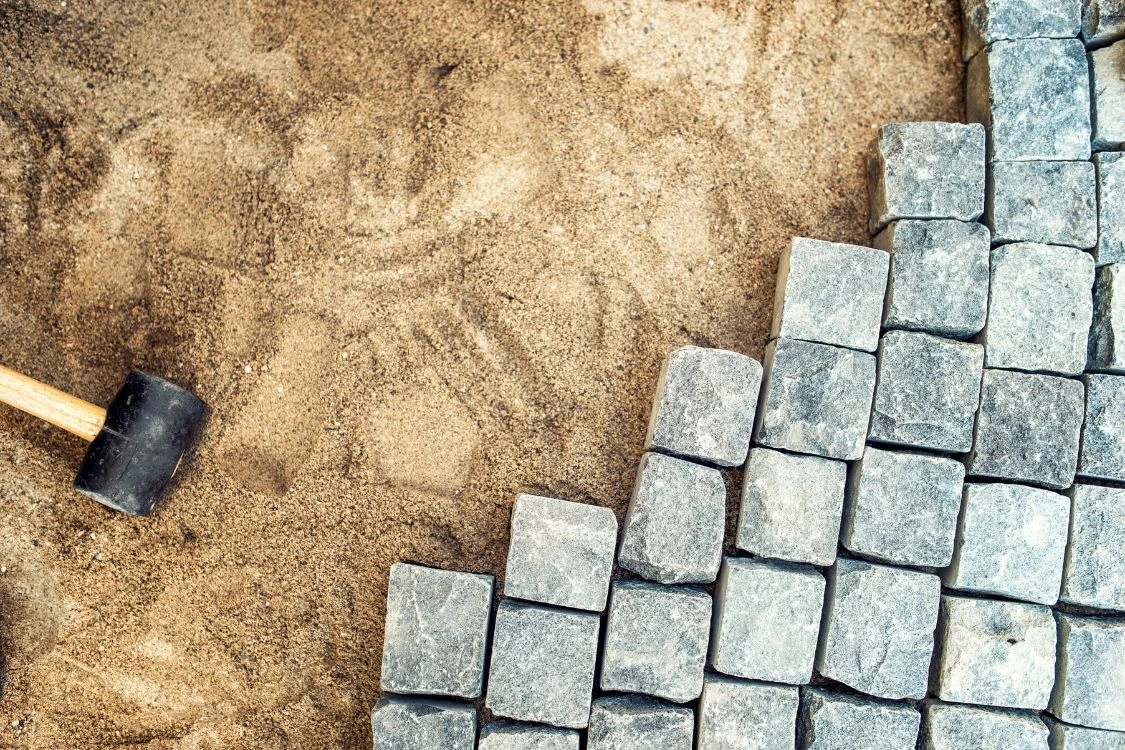
These unique stones connect like puzzle pieces to form a firm yet adaptable surface, one of the core interlocking pavers benefits. They come in hundreds of shapes, colors, and textures — and are usually made from concrete, stone, or brick. You’ll often see them in yards, driveways, patios, and even in commercial spaces because they look great and hold up well.

How Interlocking Systems Work

Each unit locks into place without the need for mortar, using spacer edges. This design allows seamless load distribution and slight movement with changing ground conditions. In addition, permeable variants encourage effective water flow through the joints, minimizing puddling and aiding stormwater control.

Why Homeowners Choose Interlocking Over Other Options

Compared to Asphalt and Poured Concrete

Traditional surfaces like asphalt and concrete often come with headaches — they can crack, shift, or fade over time. Asphalt softens in the heat, and fixing concrete can be expensive. Interlocking pavers, on the other hand, are built to move with the ground — no cracking, and repairs are quick and easy.

Durability and Load Resistance

Durable driveway pavers are made to handle heavy loads. They’re often used in airports and commercial lots, which makes them more than capable of withstanding residential vehicle traffic. When installed with a proper base, they offer superior durability and impact resistance.

Permeability and Drainage Benefits

One key advantage is excellent drainage. Installing eco-friendly, permeable pavers allows rainwater to flow naturally through spaces, preventing accumulation and reducing flooding or clogged drains.

Aesthetic Flexibility

From cobblestones of the ancient world to modern clean lines, customized interlocking pavers give you total control over your landscape style. They come in many colors, finishes, and designs, and they suit any home exterior.

Benefits of Interlocking Pavers for Driveways

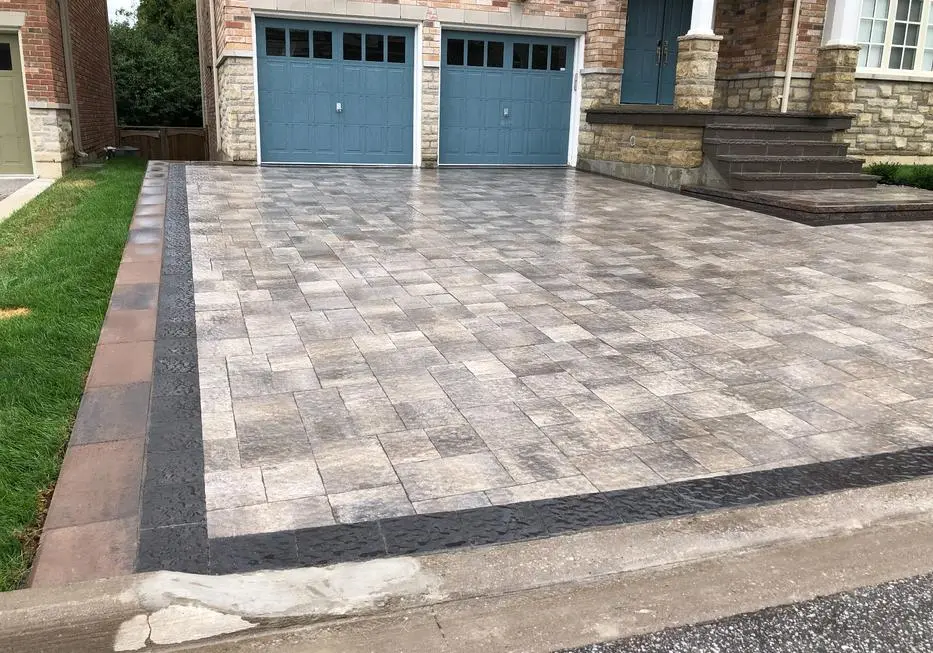
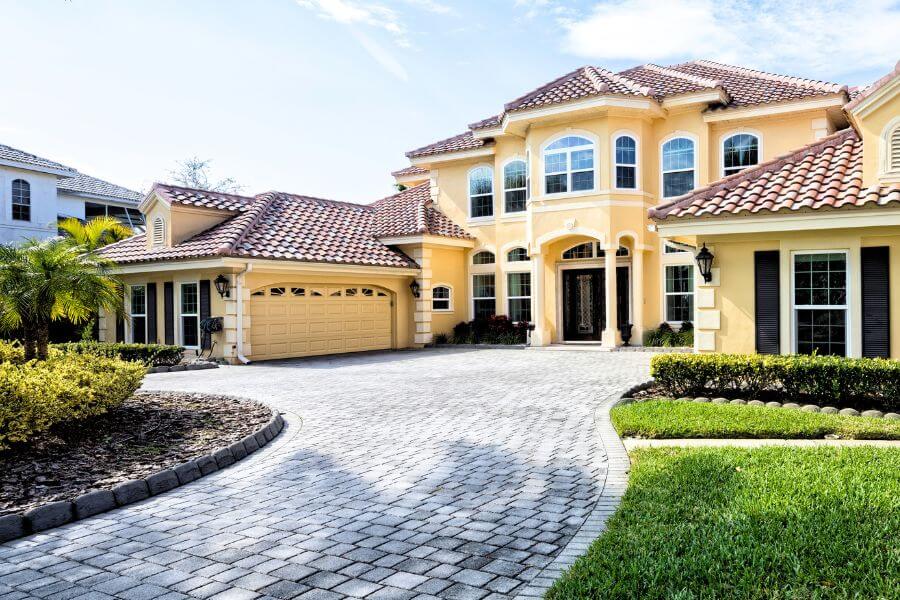
Permeable interlocking concrete pavers on driveway, image by oakshs.ca

Handles Vehicle Weight

Properly installed interlocking paver driveways hold up to daily vehicle use without sinking or fracturing. That makes them an excellent long-term solution for residential entrances.

Easy Repairs

If one piece stains, is damaged, or shifts, that section can be lifted and replaced independently — no large-scale demolition required. This makes interlocking stone repair affordable and minimally invasive.

Increases Curb Appeal

Choosing the best pavers for driveway appeal can dramatically increase your home’s value and aesthetic charm. With border accents or inlaid patterns, they adapt to any aesthetic preference — classic or modern.

Benefits of Interlocking Pavers for Patios

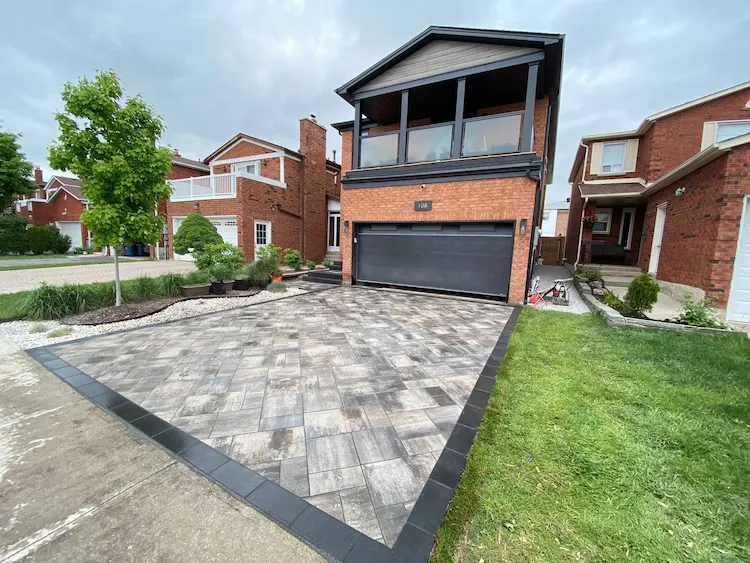
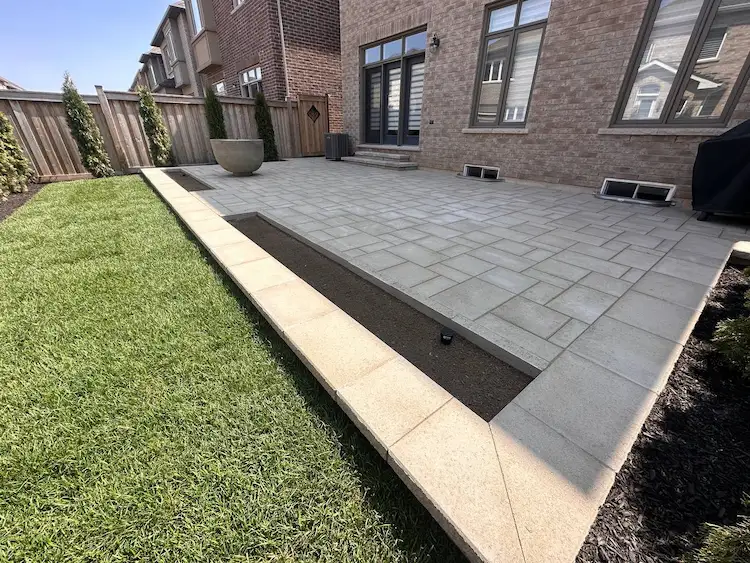
Interlocking stone patio with clean edges, image by oakshs.ca

Visual Impact

Patios are about leisure, and pavers add visual warmth and elegance. Interlocking stone gives you the freedom to get creative — from cozy, rustic styles to clean, modern designs, with unique borders or patterns to make it your own.

Furniture-Friendly Surface

Unlike irregular stone or patterned concrete, the even surface supports seating arrangements without wobble. They’re ideal for outdoor living setups, including tables, chairs, and fire pits.

Seasonal Resilience

Interlocking patio pavers for cold climates excel due to their frost resistance. Their modular nature prevents widespread surface failure when the ground freezes and thaws.

Benefits of Interlocking Pavers for Walkways

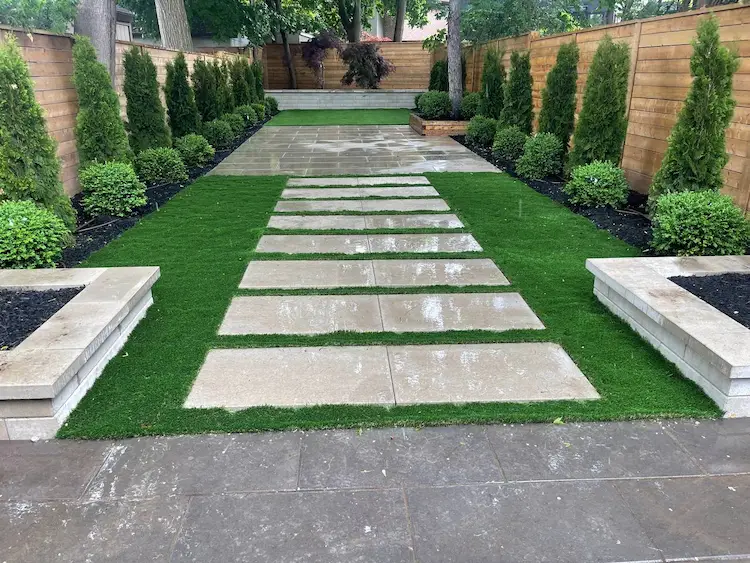
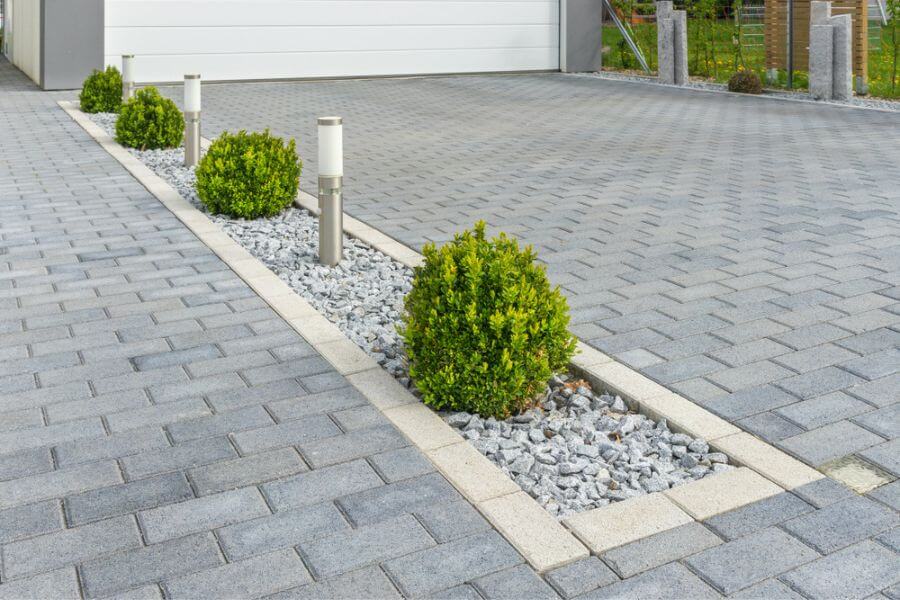
Interlocking landscape walkway with green borders, image by oakshs.ca

Slip Resistance

Natural textured pavers aren’t just nice to look at — they also are slip resistant, which really matters on rainy or snowy days.

Smooth Transitions

Clean edges and flexible shapes ensure seamless flow between areas. Mobility devices and strollers glide easily across the level terrain.

Design Integration

Extending the same style from patios to driveways creates a cohesive and thoughtfully planned outdoor environment.

Maintenance & Longevity

Essential Tips for Maintaining Your Interlock Driveway, Walkway or Patio

  • Sweep regularly to prevent debris buildup.
  • Hose or pressure clean when needed.
  • Refill the joint sand every few years to keep the stones tight.
  • Sealing is optional but may boost color and shield against stains.
  • Replace single units as necessary — no full resurfacing involved.

Properly installed interlocking systems often last for decades, earning their reputation as low-maintenance, long-term investments.

FAQ

Are Interlock Pavers Good for Winter?

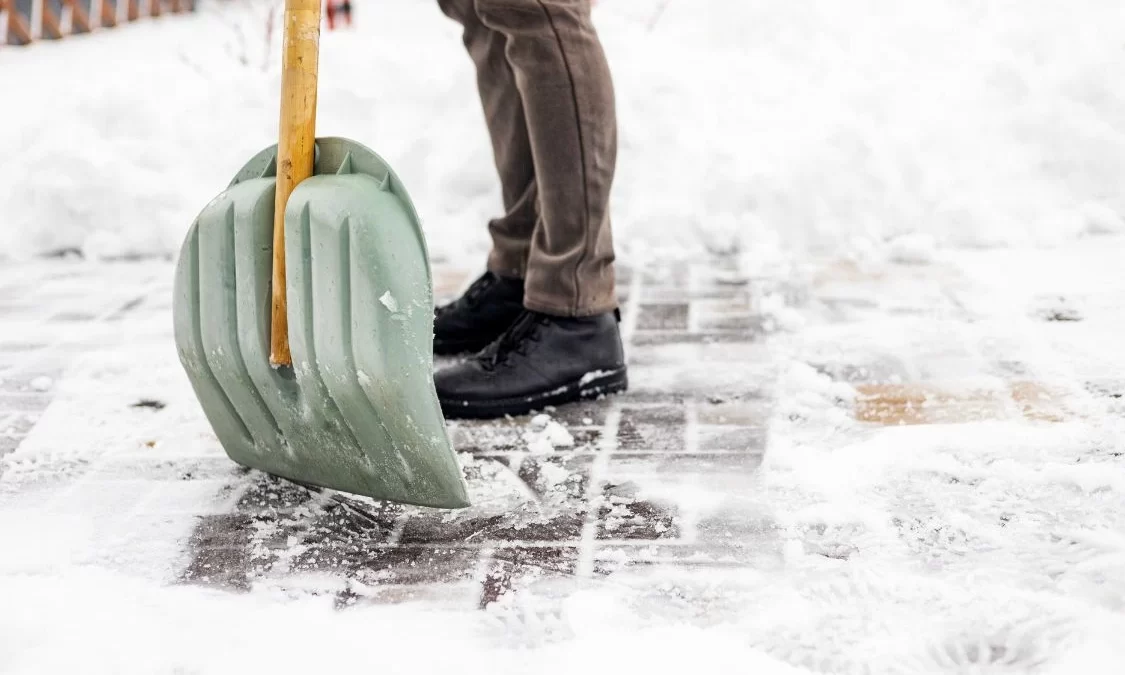
Absolutely. Interlock pavers are built to handle tough winters — they resist cracking in freezing temperatures and don’t let water pool, so you won’t be dealing with icy puddles. That makes snow removal easier and surfaces safer, especially during Canadian winters.

Can I Install Them Myself?

While technically possible for skilled DIYers, proper base preparation and edge restraints are critical. For driveways or large patios, professional installation ensures performance and longevity.

How Long Do They Last?

Well-maintained pavers can endure 30–50 years. Since individual segments are replaceable, their functional lifespan often exceeds that of poured surfaces..

Will They Boost My Property Value?

Yes. Thanks to their upscale appearance, durability, and curb appeal, paver installations can enhance the resale value of your home. They also offer a high ROI as a landscaping upgrade.

Conclusion

From permeable interlocking concrete options that safeguard foundations to decorative landscape solutions that elevate curb appeal, interlocking pavers offer clear advantages. Whether upgrading a driveway, crafting a cozy patio, or installing a secure walkway, these systems provide unmatched flexibility, durability, and value. It’s easy to understand why many homeowners choose them as their preferred outdoor surface.

Contact Us For a Free Estimate!

Interlocking Around Pools: Best Practices & Plant Pairings

Creating a welcoming poolside retreat involves more than just crystal-clear water and modern furnishings. The material you choose for the surface will determine how safe, durable, and attractive this area will be. When homeowners across Toronto and GTA consider their pool deck landscaping options, interlocking surfaces consistently emerge as the gold standard that combines functionality with stunning aesthetics.

The space around the swimming area must meet several requirements at once — it must be safe, comfortable for relaxation, and blend harmoniously with other elements of the landscape. Success depends on thoughtful material selection, proper water drainage, and plant compatibility tailored to the layout.

Why Interlocking is a Smart Choice for Poolside Spaces

The best pool landscaping ideas, image by Oaks Home Services

Using interlocking around pools introduces adaptability rarely found in rigid surfaces. Its component-based layout simplifies future repairs — should movement occur, single pieces are replaceable without disrupting the rest. Flexibility of this kind proves especially useful in Ontario’s climate, where ground shifts are seasonal realities.

Surface safety is also one of the central concerns for pool decking. Interlocking surfaces offer reliable performance, offering slip resistance under wet conditions — unlike smooth tile or untreated concrete. Water flows between paver joints, helping eliminate puddles that could cause falls.

Design-wise, interlocking pavers unlock creative options that solid slabs cannot. Patterns, accent borders, and colour blends can be tailored to reflect the style of your property and outdoor environment.

Best Practices for Installing Interlocks Around Pools

What is the best stone for pool deck, image by Oaks Home Services

Proper installation begins long before the first paver touches the ground. If you choose the best materials for pool decking and prepare the base correctly, the decking will last for decades. In the GTA’s climate conditions, it’s essential to build a properly layered base that allows for efficient drainage and can withstand freeze-thaw cycles. For example, at Oaks, after the swimming pool installation is complete, the interlocking process begins with excavating the area to a depth of 12 to 14 inches. The first critical step is to separate the native soil from the gravel base using geotextile fabric. Then, we compact the base material thoroughly, every 2–3 inches, to ensure long-term stability of the interlocking pavers. Next, we spread a layer of HPB (High Performance Bedding) — a self-leveling material that doesn’t require additional compaction. The pavers are laid directly on top of this bedding layer. Finally, we install edge restraints to keep the pavers in place and sweep polymeric sand into the joints. This not only locks the pavers together but also helps prevent weed growth and adds durability to the surface.

Effective slope design is critical. Hard surfaces near pools should tilt slightly away from the water — around 2% — to allow runoff, without creating hazards for walking or sitting furniture. Skilled landscapers understand how to achieve this balance without compromising functionality.

When selecting joint filler, opt for polymeric sand. It resists erosion from splashes, helps block weed growth, and stabilizes the layout. Compressing and activating the sand correctly ensures the area handles both water and heavy use without issues.

Choosing the Right Material

Interlocking Pavers

Textured interlocking options top the list when selecting the best pavers for pool deck builds. Purpose-designed varieties include built-in channels and anti-slip coatings for added safety. Modern manufacturing techniques produce concrete options that closely mimic natural stone textures while providing consistent dimensions and colours. This is a great idea for pavers around pools if you need to create a decking that looks modern and practical.

Permeable versions drain directly through the paving, reducing pooling and making them perfect for areas with dense or clay-heavy soil. Their structural interlock reduces movement while supporting weight evenly. These systems appear frequently in stone landscaping around pool environments due to their balance of looks and practicality.

Natural Stone

Elegant and enduring, natural stone introduces timeless character to any outdoor setting. Every slab brings a unique variation in hue and form, offering a richness that man-made materials can’t fully reproduce. Designs using stone around pool settings blend easily with either rustic or modern styles.

Paving choices include granite, travertine, limestone, and sandstone. Each behaves differently — limestone handles heat well, sandstone adds warm colour tones and natural grip, while granite excels in strength, though smoother finishes should be avoided near water, travertine is cool underfoot, naturally porous, and elegant, and remains a top pick.

Tile

Porcelain and ceramic tiles designed for outdoor use provide unlimited design possibilities through colour, pattern, and texture variations. Large-format tiles create clean, modern appearances, while smaller mosaic tiles allow for detailed patterns and artistic elements. Anti-slip surface treatments and proper installation techniques are essential for tile success in poolside applications. Quality outdoor tiles resist freeze-thaw damage and maintain their appearance with minimal maintenance, making them an excellent choice for decking around a pool.

Picking Ideal Textures and Colours for Pool Comfort

Light-coloured materials retain less heat, making them comfortable for bare feet, although stains are more visible on such surfaces. Medium shades provide a balance between temperature and visual cleanliness. Rough textures are more slip-resistant but can be more difficult to maintain than smooth surfaces.

Always evaluate samples in both dry and wet conditions. Colours often shift dramatically when exposed to moisture, and what looks ideal in a small piece may differ once scaled across a full yard.

Blending Interlock with Poolside Landscaping

Pool privacy landscaping idea, image by Oaks Home Services

A succeeding idea for pool hardscape is creating seamless transitions between built and natural elements. Choose a shared colour scheme between plants, walls, and pavers to make transitions seamless. Repeating certain finishes in walkways or patio borders ties everything together.

Consider sight lines from inside your home when planning poolside hardscape elements. The view from kitchen or living room windows should be cohesive and meaningful, rather than resembling separate areas competing for attention.

Integrating Lighting into the Pool Hardscape

With built-in lighting, you can transform your pool area from a daytime relaxation spot into an evening entertainment venue. LED strips embedded in steps or paving joints can create soft lighting that enhances safety without overwhelming the space. Lighting installed inside planted areas helps to highlight individual plants and create effective shadows on surrounding surfaces.

Solar-powered lighting is much easier to install, while wired devices provide more reliable operation and brighter lighting.

Choosing the Right Plants for Poolside Environments

Plants near the pool must withstand the heat reflected from the water, periodic exposure to chemicals from the swimming pool water, and, possibly, exposure to salt if you use saltwater systems. It should also complement the visual design, not overtake it.

Choose species with compact roots that won’t disturb the pavers. Aggressive roots could eventually compromise the hardscape’s stability.

Top Low-Maintenance Plants to Pair with Interlock

Best plants around pool installations often include ornamental grasses that provide movement and texture without creating debris. Fountain grass, feather reed grass, and blue fescue offer different heights and textures while requiring minimal care once established.

Evergreen shrubs are ideal plants for creating privacy around the pool and do not require seasonal pruning. Boxwood, juniper, and yew varieties adapt well to poolside conditions, grow at different rates, and require almost no maintenance.

Hostas and coral bells are plants that grow well near the pool in partially shaded areas. These are perennial plants that require minimal care and create a contrast in colour and texture with the hardscape materials.

Best Flowering Plants That Won’t Make a Mess

If you are looking for ideas on how to arrange flowers around your pool, we recommend focusing on plants with small flowers that hardly fall off, or varieties that naturally fade. Catnip, sage, and echinacea are characterized by a long flowering period and practically do not litter the area with fallen petals.

Instead, we recommend avoiding plants with large flowers and large petals — choose varieties of which the flowers remain intact until they have completely faded and do not litter the water and paths around the pool.

Using Planters and Raised Beds with Interlock Surfaces

Potted plants around pool areas offer flexibility that in-ground plantings can’t match. Move them with seasonal needs or adjust layouts during events.

To create focal points or visually separate areas, use planters or flower beds integrated into landscape structures. Raised beds improve drainage and make tending easier while reinforcing the layout structure.

Working with Landscape Professionals for Best Results

Pool landscaping design requires coordinating multiple trades and understanding how each element affects others. Our team can bring experience with local soil conditions, drainage requirements, and plant performance that helps avoid costly mistakes.

We ensure compliance with regulations and insurance standards. You’ll also receive warranty protection with professionally completed work.

Coordinating all these components on your own is challenging. Working with experts leads to a visually cohesive and functional retreat that adds value while reducing long-term upkeep.

Contact Us For a Free Estimate!

Interlock Driveways vs Concrete Driveways vs Asphalt Driveways: A Comprehensive Comparison

For many people, repairing or renovating their home and outdoor space is a daunting task, because let’s face it, it’s not something we do on a daily basis. And that includes the driveway, of course. In the Greater Toronto Area (GTA), customers mostly choose between the standard options: interlock, concrete or asphalt driveways. As is always the case, each option has both advantages and disadvantages. So let’s simplify the task and try to explain and figure out which is better and which material is suitable for your case.

Not All Driveways Are Created Equal: Getting to Know Your Options 

At first glance, a driveway seems like a fairly simple thing — just a road, a typical place to park a car. But the material it’s made of actually plays a much bigger role than most people may realise. It affects the appearance of the house and courtyard — the way you and others see it from the street. And most importantly, it affects how much time and money you will spend on maintaining it in the future. You’ll agree that this is an essential “nuance”.

There are three most commonly used options and each has its own strengths, trade-offs and style. And let’s be honest — as with most home improvements, there’s no one-size-fits-all answer. The best option depends on what’s most valuable to you — curb appeal, budget, longevity, or just plain simplicity. There is plenty to think about.

Interlock: A Modular Wonder

Interlocking paving stones are individual bricks or stones (often on aggregated or concrete base) that are interlocked to form a continuous surface. In fact, it looks like an interesting jigsaw puzzle for your courtyard. And the diversity of designs and colours allows you to create a driveway that is as customised as ever.

The main feature is that the interlocking is a modular construction, unlike asphalt or cement, which are poured. And this is the main benefit – if one part cracks or moves, it can be easily replaced without the need to fix and disassemble the entire road. And in our Canadian climate, where weather cycles can take a toll on paved surfaces, this flexibility is a huge advantage.

Interlock is also permeable, which helps with drainage — a big help if you’re trying to reduce water runoff or dealing with puddles around the garage and when you get out of the car.

Asphalt Driveways: The Budget-Friendly Classic

Asphalt is the most familiar sight on Canadian roads — and for good reason. It’s fast to install, easy on the wallet, and handles snow surprisingly well thanks to its dark surface that absorbs heat and encourages melting.

But that budget-friendly charm comes with strings attached. Asphalt is tender and tends to crack over time, especially with our local winters — you know the drill. Regular sealing of such a road is a must — every 2-3 years it will become your constant adventure. And even with this approach, it can only last 15-20 years, and then, all under replacement! Well, this is clearly not the easiest option.

Still, if you need a quick fix or have a long driveway and limited funds, asphalt can be a smart short-term solution.

Concrete Access Roads – change to driveways/patios etc: Strong, Sleek, but Not So Forgiving

Concrete has a reputation for being a smooth, contemporary, and almost indestructible material — and to a certain extent, this is true. A well-poured concrete road can last for 25-30 years.

But concrete is rigid — it doesn’t bend with changes in temperature or ground movement. In Toronto, winters are really fierce and frosts are real, and this can lead to cracks that are not easy (or cheap) to repair.

Concrete is also more prone to stains — from oil leaks to de-icing salts — and when it cracks, you often can’t patch it up discreetly. Repairs usually stand out.

Meet the Showstopper: What Makes Interlock Driveways So Special? 

If there is a material for a driveway that attracts the attention of passers-by and elicits compliments, it is interlock. But it’s not just about appearance. Interlocking paving stones combine form, functionality, and flexibility that few other materials can match.

interlocking driveway ideas

So, What Are Interlocking Driveways?

Instead of pouring a solid slab, as in the case of concrete or asphalt, the driveway is built in parts from specially designed paving stones. These pavers are usually made of high-strength concrete or natural stone and are laid on a compacted base of gravel and sand. They are designed to bond tightly together, distributing the weight evenly and preventing shifting.

Moreover, they are designed to move. Slightly, of course. And that’s what helps them withstand the infamous Canadian freeze-thaw cycles without cracking. Where hard surfaces can bend, interlock bends, and breathe with the ground.

No wonder interlocking has become one of the best materials for driveways — and why homeowners (and our team at Oaks!) love it so much:

Pros of Interlocking Driveways:

  1. Design freedom. Paving stones come in an infinite number of colours, patterns and textures. You can match the design to the architectural ensemble of your home or adjust it to the general landscape of the area.
  2. Repairability and the possibility of replacement. If any area is damaged or dirty, it doesn’t matter — pull out a few stones and replace them. Now try doing it with concrete!
  3. Better drainage. Interlocking surfaces are more permeable than concrete and asphalt driveway, reducing runoff and improving water flow.
  4. Durability. Interlocking driveways can last for up to 30 years — and still look good. Of course, it’s all about proper installation, but that’s our concern.

Cons of Interlocking Driveways:

  1. Higher upfront cost. Compared to an asphalt or concrete driveway, interlock is a bigger investment.
  2. Maintenance. Weed growth between pavers and occasional joint sanding or sealing might be required.
  3. Installation quality matters. Poor installation can lead to uneven surfaces and shifting over time — that’s why choosing the right contractor is key.

When it comes to price, interlock driveway cost can vary depending on size, materials, and site conditions. It’s usually higher than asphalt or concrete options, but in terms of aesthetics, flexibility, and longevity, interlocking gives you a long-term return. It’s no surprise many homeowners choose interlock and asphalt driveways combinations to balance beauty and budget, or go all in on interlock for a statement finish.

The Classic Choice: What Are Asphalt Driveways and Why They’re Still a Go-To

Asphalt driveways are a tried-and-true option that have been used for decades in Canada. It’s made from a blend of crushed stone, sand, and bitumen — a sticky, petroleum-based binder. It’s poured hot, rolled out into a smooth surface, and cools quickly to create a strong, black top layer that handles vehicle traffic like a pro.

What Are Asphalt Driveways

Asphalt pros and cons:

Pros:

  1. Quick installation — it’s one of the fastest materials to lay down.
  2. Budget-friendly — the cost of asphalt driveway is usually significantly lower.
  3.  A clean, simple look that suits most homes without clashing with landscaping or architecture.

Cons:

  1. Can soften during heatwaves and crack in cold snaps (hello, Canadian winters!).
  2. Does Not last as long as interlocking or concrete driveways (15-20 years vs 45-50 years of service).
  3. Needs sealing every couple of years to stay in good shape — skip that and it can wear out faster.
  4. Doesn’t offer the design versatility or upscale vibe of something like interlock.

Asphalt is a solid choice if you’re looking for one of the best driveway materials without breaking the bank. When comparing the cost of concrete driveway versus asphalt, the latter usually comes out ahead on price — though it might need more maintenance long-term.

In short, asphalt gets the job done. It’s practical, it’s affordable, and with the right upkeep, it’ll serve you well for years. 

What Are Concrete Driveways and Why They Stay in Style 

Clean, contemporary, aesthetically pleasing — it’s all about concrete driveways. Concrete is poured as a liquid mix of cement, sand, and gravel, then left to cure into a hard, smooth surface. With proper maintenance, it can easily last for decades, which is why so many people choose it for long-term value.

Concrete driveway pros and cons:

Pros:

  1. Impressive lifespan — 30+ years with the right care.
  2. Minimal maintenance compared to asphalt.
  3. Holds up well to heat and direct sun, without softening.
  4. Bright, polished appearance adds curb appeal to any home.
  5. Handles high-traffic areas without wearing down fast.

Cons:

  1. Can crack over time, especially with freeze-thaw cycles.
  2. Repairs are often visible and not cheap.
  3. Installation takes longer and isn’t a quick weekend project.
  4. Upfront costs are noticeably higher — especially when comparing the cost of concrete driveway vs asphalt.

Concrete isn’t the most budget-friendly option. While it delivers both durability and a refined look, homeowners should consider the cost difference between concrete and asphalt. Concrete typically comes with a higher initial price tag, but for many, the long-term payoff is worth it.

What Are Concrete Driveways

Keeping Your Driveway Happy: Real Talk About Driveway Maintenance 

No matter what driveway material you choose, some maintenance is always part of the deal. Good news! It’s not quantum physics, but knowing what to expect can save you time, money, and headaches in the future.

Interlock Driveway Maintenance

Interlocking driveways are very easy to live with. If the paving stones shift or crack, you don’t need to redo the entire pavement. Weeds may appear here and there, but a quick sweep or filling of the joints will keep everything clean. Add sealing every few years for extra protection and you’re in the clear.

Bonus: no ugly patches. Ever.

Concrete Driveway Maintenance

Concrete is tough, but once it’s cracked, it stays cracked. Sure, sealing can help delay it, but repairs are more visible, and the harsh winters in the GTA can be unfavourable. Salt and temperature changes don’t do it any favours either.

TL; DR: Concrete is low-maintenance until it breaks down.

Maintenance of Asphalt

Asphalt is like a moody teenager on the driveway — it needs attention. Every 2-3 years, it needs to be sealed, and cracks should be monitored, especially after winter. If left unchecked, small problems can spread quickly. But what is the advantage? It is the easiest surface to patch if something goes wrong.

Treat it well and it will return the favour.

So, Which Driveway Is Right for You? 

Let’s be honest — picking a driveway material isn’t something you do every day. But it’s a big decision, and it deserves a little thought. 

So, How Do You Choose? Pros & Cons

  1. If low maintenance and a polished, uniform look are your priorities, concrete is an option, but be prepared for cracking and long curing times.
  2. If you need speed and accessibility, asphalt has its advantages, especially for large surfaces. But you will need to seal and patch more often than you think.
  3. If you’re looking for something that will really change the look of your property — something that’s attractive, durable, and can withstand all seasons — interlocking driveways are hard to beat. They’re customizable, maintainable, and look contemporary. Yes, the initial cost may be higher, but the style and durability are absolutely worth it.

Still unsure? Don’t worry — that’s what we’re here for. The Oaks team will help you weigh all the options and design a driveway that meets your needs (and looks great at the same time).

DIY Your Driveway or Call the Pros?

Thinking about doing your driveway yourself? We get it — there’s something satisfying about rolling up your sleeves and saying, “I did that.” But before you head to the hardware store, it’s worth weighing a few things.

Installing a driveway isn’t just about laying bricks or pouring concrete. It’s about proper grading, drainage, structural base layers, edge restraints… and that’s just the start. Interlocking especially demands precision. One small miscalculation, and you might be watching your beautiful work shift and sink with the first thaw.

If you’ve got the experience, time, tools, and stamina — a DIY driveway could save some money. But for most homeowners, hiring professionals means peace of mind, guaranteed workmanship, and a driveway that lasts for decades, not just a few seasons.

At Oaks, we’re not just about making your life easier — we’re about getting it done right the first time.

Contact Us For a Free Estimate!
Creating a Dream Backyard: Why You Need a Landscape Designer

Everyone fantasizes about that perfect backyard-one that’s ideal for relaxing and entertaining. But it will take much more than a couple of potted plants and a patio set to make your ordinary lawn your perfect little piece of heaven. If you are looking for an exceptionally unique outdoor space reflecting beauty, functionality, and lasting value, you surely need professional help from a landscape designer. That’s where Oaks Home Services comes into play.

At Oaks Home Services, we are a premium landscaping company serving Toronto and the GTA. For over ten years, we have helped bring our homeowners’ outdoor visions to life. From custom-designed patios to luscious garden landscapes, every detail will be taken care of to make sure that your backyard not only looks fantastic but also works with your lifestyle. Our landscape designers balance artful solutions with practical experience to avoid expensive mistakes and help your space become a long-term investment in beauty and value.

The Benefits of Hiring a Landscape Designer

creating your dream backyard with a landscape designer


Before you grab your shovel and start digging, consider how a landscape designer can transform your backyard into the envy of the neighbourhood. It is much more than just beautification; it’s about creating a functional space that you will be able to enjoy for years to come. Let’s discuss exactly why working with a designer—especially one from Oaks Home Services—makes all the difference.


Expertise and Vision

With Oaks Home Services, our designers have the experience and creative eye to turn your rough ideas into a cohesive, breathtaking design. Whether you need help with a sloped yard, help integrating a water feature, or figuring out where to begin, we can bring your vision alive and work out any tricky landscaping you may face along the way.


Customization To Fit Your Lifestyle

We believe every homeowner is different, and no two backyards should be the same. That’s why our landscape designers take the time to learn about your lifestyle and how you want to use your outdoor space. Whether it’s fulfilling your dream of a family-friendly garden, a sleek modern patio, or even a backyard built for entertaining, we customize each project to fit your needs.

The Planning Process: It’s More Than Just Planting


Designing your dream backyard means more than just throwing together a few plants and pathways. A professional landscape designer knows how to combine natural elements with appropriate materials to create a cohesive and functional space.

Maximizing Your Space

No matter how big or how your outdoor space is laid out, our designers know just how to make every square foot count. Have a small yard? We’ll optimize it with vertical gardens and smart design elements. Have a large property? We’ll create distinct areas that meld together in beauty, creating an expanse of space that feels both open and inviting.

Choosing the Right Materials

Trying to choose from so many different materials can be overwhelming, but Oaks Home Services will gladly walk you through it. We know just the right materials that work best for Toronto’s climate and make sure the stones, wood, or plants we use are beautiful yet resilient. From elegant stone patios to custom-made wooden pergolas, among other things, we have got you covered.

Blending Natural Elements

At Oaks Home Services, we are great at incorporating natural elements already in your yard. Whether preserving mature trees, working around existing slopes, or maximizing natural sunlight, we make sure that your landscape feels like it has been there all along.

landscape designer creating your dream backyardWhat Can Oaks Home Services Create for You?

Oaks Home Services landscape professionals are much more than a plant selection company. We make sure that all of the elements in your outdoor space are creatively designed and skillfully installed. Here’s just a look at what we can create for you:

  • Interlocking Driveways: a stylish, durable way to greatly help with curb appeal.
  • Retaining Walls: many are functional while also having beautiful features.
  • Water Features: from fountains to ponds, or waterfalls, adding water brings tranquility to your space.
  • Lighting: The use of accent lighting will make your backyard magical after dark.
  • Seating Areas: From intimate fire pits to formal dining areas, no outdoor entertaining space is complete without seating.

Why DIY Isn’t The Best Idea

It’s tempting to try your hand at backyard projects yourself. After all, how hard can planting a few flowers be, right? But before you hit the hardware store, consider these reasons why DIY may not be the most cost-effective-or aesthetically pleasing-route.

Avoid Costly Mistakes

Poor grading, inadequate drainage, and improper plant selection will lead to some pretty costly problems later on. Professional landscape designers avoid these potential pitfalls, saving you from future costly repairs in return.

Long-term Value

While DIY appears cheaper up front, hiring a designer adds long-term value to your property. A professionally designed and installed landscape will add to the resale value of your home and ensure everything holds up over time.

why yo need a backyard landscape designer to create a dream backyard

Why Hire Oaks Home Services To Transform Your Backyard 

If you are ready to turn your backyard dreams into reality, look no further than Oaks Home Services. As one of the leading landscaping companies in Toronto and the GTA, we offer expertise, precision, and unparalleled craftsmanship in every project. We work in tandem with you right from the very start to ensure that your backyard is not only attractive but also meets your specific needs.

Why Choose Us?

  • Attention to Detail: We don’t miss a thing. Every plant, stone, and fixture is installed with care and precision.
  • Skilled Craftsmanship: Our staff is proficient in all areas of exterior works to make certain your backyard is built to last.
  • Custom Designs: No cookie-cutter solutions here; each design is personalized with your vision.

Ready to Create Your Dream Backyard?

We feel that every homeowner is entitled to a backyard that’s as beautiful as it is functional. Let Oaks Home Services take a single step further to transform your outdoors into your dream backyard. Be it an interlocking driveway, a serene water feature, or simply renovating your patio, our landscape designers are here to convert your dream into reality. With over a decade of landscaping experience throughout Toronto and the GTA, you can rely on us for quality craftsmanship for every job!

Contact Us For a Free Estimate!

Why Driveway Interlocking is Ideal for Harsh Canadian Winters

During winter, Canadian driveways can become a battleground of snow, ice, and wear and tear. If you’ve had enough of traditional driveways’ routine maintenance and questionable performance, now is the time to think about driveway interlocking and the many benefits that give your home pretty much everything it needs.

Oaks Home Services can help you get started today with a consultation. See how our professional team can interlock your driveway with elegance and durability. Let’s take a look at what makes interlocking an excellent choice for your driveway and how it can transform your basic driveway into a magnificently attractive one.

The Winter-Worthy Benefits of Driveway Interlocking

It’s not all about the aesthetic view it presents but a practical way to get through the freezing cold in Canada. Here’s why driveway interlocking works best for our harsh Canadian winters:

Durable Under the Freeze

The interlocking pavers are designed to withstand the freeze-thaw cycle that Canadian winters usher in. Unlike asphalt, which cracks and deteriorates, interlocking pavers are elastic, shifting to the changes in weather to reduce the chances of damage and keep the driveway spotless.

Improved Traction

A driveway is hazardous when it is covered in ice and snow. In terms of traction, interlocking driveways have proven to be much better than their forerunners, asphalt or concrete surfaces. Their textured faces can provide a much better grip, hence making your driveway a far safer place during snowy conditions.

Easy Snow Removal

Snow removal on an interlocking driveway is easy. This is because, in most instances, the pavers are easier to clear than those of asphalt since snow tends to get stuck in the cracks of asphalt so easily.

Low Maintenance

The maintenance of interlocking pavers is very low. Unlike asphalt, which often needs resealing and repairs, interlocking pavers avoid stains and damage altogether. On those rare occasions when there may be a problem, you can simply replace the problematic paver.

driveway interlocking ideal for harsh canadian winters

Giving Your Driveway a Makeover to Perfection

Selecting driveway interlocking will cover not only practical but also elegant solutions for your house:

Custom Designs

With everything from colour, shape, and pattern, you have the ability to create a driveway for your home that ramps up the appeal. Ranging from classic to contemporary, interlocking pavers can be adapted to any design you may want.

Increased Curb Appeal

A great, well-designed interlocking driveway greatly improves the attractiveness of your property. The clean lines and sophisticated patterns add an air of sophistication, setting your home apart from those in your neighbourhood.

Increased Home Value

Besides aesthetic appeal, a well-crafted interlocking driveway will contribute value to your house. A very common association for buyers is that a well-maintained, attractive driveway is indicative of the overall quality of a home and shows well for resale.

ideal driveway interlocking for canadian winters

Transform Your Driveway with Oaks Home Services

At Oaks Home Services, we install fantastic-looking and long-lasting interlocking driveways, custom-suited for Canadian winters. Our experienced contractors use the best-quality stone products with a limited 5-year labour warranty so that your driveway will look great and perform well through the season. We will help you select from materials to design what works best for your style and budget and make the upgrade process as seamless and affordable as possible.

Contact Us For a Free Estimate!
The Best Material for Your Driveway in 2023

Introduction to Driveway Materials

A driveway is a crucial part of any property, serving as the primary access point to your home or business. The best driveway materials can significantly enhance the curb appeal and overall value of your home. With a wide range of materials available, you should choose one that suits your needs, budget, and preferences. This article will explore the best material for driveways and provide insights to help you make an informed decision.

Factors to Consider When Choosing Driveway Materials

Before diving into the specific materials, let’s explore the factors you need to consider when selecting the ideal driveway material.

Climate

The climate in your area plays a significant role in determining the best material for your driveway. Some materials may not hold up well under extreme temperatures or heavy precipitation, leading to costly repairs and maintenance.

Budget

Your budget is another crucial factor when selecting a driveway material. Prices can vary significantly based on the material and installation costs. Make sure to choose an option that fits your budget without compromising on quality.

Maintenance Requirements

Different materials come with varying levels of maintenance needs. Understanding the maintenance requirements for each material will help you make a more informed decision and avoid unexpected costs down the road.

Aesthetics

Your driveway’s appearance can greatly influence the overall look and feel of your home. Consider how your choice of material will complement your home’s exterior and landscaping.

the best driveway materials 2023

Popular Driveway Materials

Let’s take a closer look at some popular driveway materials and their pros and cons.

Concrete

Concrete is a common driveway material due to its durability, longevity, and low maintenance requirements.

Pros of Concrete

  1. Long-lasting and durable
  2. Low maintenance
  3. Versatile design options (colours, patterns, etc.)

Cons of Concrete

  1. Susceptible to cracking in cold climates
  2. Can be expensive to install
  3. Stains easily

Asphalt

Asphalt is another popular material for driveways, primarily for its affordability and ease of installation.

Pros of Asphalt

  1. Affordable
  2. Quick installation
  3. Performs well in cold climates

Cons of Asphalt

  1. Requires regular maintenance (resealing)
  2. Less design versatility than concrete
  3. Not as environmentally friendly

Gravel

Gravel is an affordable and versatile option for driveways, particularly for rural properties or those with a more rustic aesthetic.

Pros of Gravel

  1. Affordable
  2. Easy to install and maintain
  3. Allows for natural drainage

Cons of Gravel

  1. May require regular regarding
  2. Not suitable for all climates (e.g., heavy snowfall)
  3. Can be difficult to remove snow and may cause dust issues

Pavers

Interlocking pavers are a popular option for those looking to add a touch of elegance and customization to their driveway.

Pros of Pavers

  1. Wide variety of design options
  2. Easy to repair and replace individual pavers
  3. Can withstand freeze-thaw cycles

Cons of Pavers

  1. Higher installation cost
  2. Requires some maintenance (e.g., weed control)
  3. Can be prone to shifting or settling over time

driveway interlocking materials

Comparing Driveway Materials

When comparing the best driveway materials, it’s essential to weigh the pros and cons of each option for your specific needs. Consider factors such as climate, budget, maintenance requirements, and aesthetics to determine the best material for your driveway.

Choosing the Best Material for Your Driveway

Ultimately, the best material for driveways will depend on your unique needs, preferences, and budget. By considering the factors mentioned above and weighing the pros and cons of each material, you can make a more informed decision that suits your specific requirements.

Conclusion

Selecting the best material for your driveway is an important decision that can significantly impact your property’s curb appeal, value, and functionality. By considering the various factors and understanding the pros and cons of popular driveway materials, you can make a well-informed choice that meets your needs and enhances your property. Oaks can help you get the driveway of your dreams by providing expert guidance and high-quality materials tailored to your specific requirements. Don’t hesitate to contact us today for an estimate and take the first step toward creating a beautiful and functional driveway that complements your home.